Trading Halt Codes Explained: T1, T2, T12, LUDP
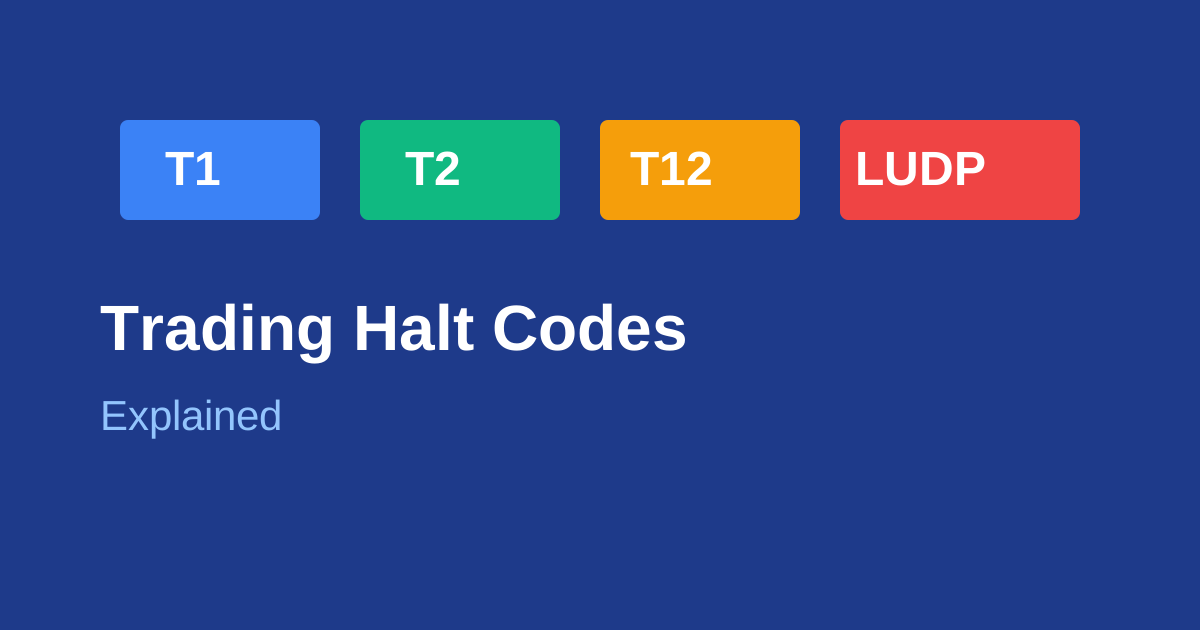
Trading halt codes communicate why a stock has stopped trading and provide critical information for making trading decisions. Understanding these codes is essential for penny stock traders because different codes signal vastly different situations—from routine volatility pauses to serious regulatory concerns. Knowing what each code means, how long the halt typically lasts, and what action to take can mean the difference between profit and loss.
This complete guide explains every major trading halt code you will encounter in penny stock trading: T1, T2, T3, T6, T12, LUDP, M, H10, and others. Learn what triggers each type of halt, typical duration, risk level, and specific trading strategies for each situation. Master these codes and you will have a significant advantage over traders who do not understand halt dynamics.
Featured Penny Stock Opportunity
Offshore Namibia Oil & Gas Exploration
Stamper Oil & Gas (STMP)
Asymmetric Opportunity: Trading at ~$10M USD with risked NAV of ~$255M and probability-weighted upside suggesting 25x potential
Industry-Leading Success: 14 of 16 exploration wells successful since 2022 in Namibia. Supermajors committing billions
Carried Interest Portfolio: Exposure to basin-opening wells without proportionate capital investment. No dilution strategy
2025-2026 Catalysts: Venus FID expected, Chevron Walvis Basin wells, new seismic on PEL 106, and multiple farm-out opportunities
⚠️ High-risk investment. Oil & gas exploration carries substantial risk including total loss of capital. Not investment advice. Conduct independent due diligence.
Quick Reference: Common Halt Codes
Here is a comprehensive overview of the most common trading halt codes:
| Code | Meaning | Duration | Risk Level | Action |
|---|---|---|---|---|
| T1 | News Pending | 30 min - 2 hours | Medium | Wait for announcement |
| T2 | News Dissemination | 5-15 minutes | Low | Read news |
| T3 | News Not Forthcoming | Hours to days | High | Avoid |
| T6 | Extraordinary Event | Variable | Very High | Extreme caution |
| T12 | Regulatory Concern | Hours to weeks | Very High | Avoid |
| LUDP | Volatility Pause | 5-10 minutes | Medium | Normal |
| M | Trading Resumed | N/A | Variable | Trade or watch |
| H10 | SEC Suspension | 10+ days | Extreme | Cannot trade |
T1 Halt - News Pending (Most Common)
T1 is by far the most common and important halt code for penny stock traders. It means the company has material news to announce, and the exchange has halted trading to ensure fair and orderly dissemination of this information to all market participants simultaneously.
What Triggers T1 Halts
T1 halts occur when companies have material information that could significantly impact stock price:
- FDA Approval Decisions: Drug approvals or rejections (biotech)
- Clinical Trial Results: Phase 2 or 3 data releases
- Merger and Acquisition Announcements: Both acquirer and target
- Bankruptcy Filings: Chapter 11 or liquidation
- Major Contract Awards: Government or enterprise deals
- Strategic Partnerships: Collaborations with larger companies
- Management Changes: CEO departures or appointments
- Going Private Transactions: Buyout offers
- Financial Restatements: Correcting previous reports
- Significant Asset Sales: Divestitures or acquisitions
How Long T1 Halts Last
T1 halts typically last 30 minutes to 2 hours, but can extend longer depending on complexity:
- Standard Duration: 30-60 minutes most common
- Complex News: 1-2 hours for complicated announcements
- After Hours: Can extend to next trading day
- International News: Longer if awaiting overseas confirmation
- Multiple Exchanges: Coordination takes time
Trading Strategy for T1 Halts
T1 halts create both opportunity and risk. Follow this systematic approach:
- Immediate: Check company website for press release
- Verify: Look for 8-K filing on SEC Edgar
- Read Completely: Understand full implications
- Assess Impact: Clearly positive, negative, or neutral?
- Set Alerts: Be ready for resume notification
- Plan Strategy: Decide buy, sell, or watch before resume
- Use Our Tracker: Get instant notifications when halted
- Position Size: Smaller if high uncertainty
- Have Exit Plan: Know your stops and targets
T2 Halt - News Dissemination
T2 indicates that news has been released and is being disseminated. This is the final stage before trading resumes, allowing time for the news to reach all market participants through official channels.
Key Characteristics
- Duration: 5-15 minutes typically
- Purpose: Ensure news reaches everyone
- What to Do: Read news if you haven not already
- Risk: Lower than T1 - news is public
- Resume Soon: Trading will restart shortly
- Prepare Orders: Get ready to execute plan
T2 halts are brief and simply ensure regulatory compliance. Use this time for final preparation before the volatility of resume.
T3, T6, T8 - Regulatory and Unusual Halts
These less common codes indicate problems requiring exchange or regulatory attention:
T3 - News Pending, News Not Forthcoming
T3 means the exchange halted the stock due to unusual activity, but the company has not provided news explaining it. This is a red flag.
- ⚠️ Unusual price/volume without company explanation
- ⚠️ Exchange investigating activity
- ⚠️ Company may not know why stock is moving
- ⚠️ Possible rumors or leaks
- ⚠️ Can last hours to days
- ⚠️ Higher risk - avoid unless you know something specific
T6 - Extraordinary Market Activity or Regulatory Concern
- 🚩 Serious regulatory concerns
- 🚩 Potential manipulation being investigated
- 🚩 Exchange has questions for company
- 🚩 Often leads to longer halt or T12
- 🚩 Very high risk situation
T12 - Regulatory Halt (Major Red Flag)
T12 is one of the most serious halt codes. It means the SEC or exchange has concerns about the company and has requested additional information or initiated a formal review. This is a major warning sign for traders.
Why T12 Halts Occur
- 🚩 SEC requests more information about operations
- 🚩 Potential accounting irregularities discovered
- 🚩 Questions about financial reporting accuracy
- 🚩 Compliance failures with exchange rules
- 🚩 Suspected insider trading or manipulation
- 🚩 Material misstatements in previous disclosures
- 🚩 Failure to file required documents
- 🚩 Investigation into management conduct
How Long T12 Halts Last
T12 halts are indefinite and can extend for extended periods:
- Minimum: Several hours
- Typical: 1-5 days
- Extended: Weeks or months possible
- No Set Timeline: Depends on investigation
- May Never Resume: Can lead to delisting
What To Do With T12 Halted Stocks
T12 halts require extreme caution:
- 🚩 Do NOT add to positions while halted
- 🚩 Prepare to exit quickly if you own shares
- 🚩 Assume the worst until proven otherwise
- 🚩 Often results in 30-70% decline on resume
- 🚩 May lead to eventual delisting
- 🚩 Professional traders avoid T12 situations
- 🚩 If you must hold, use small position sizes only
- 🚩 Monitor SEC and exchange announcements closely
LUDP - Limit Up Limit Down (Volatility Pause)
LUDP is different from other halt codes because it is triggered automatically by price movement, not by news or regulatory action. The Limit Up Limit Down mechanism is a circuit breaker designed to prevent extreme volatility.
How LUDP Works
LUDP halts trigger when a stock moves outside defined price bands:
- Trigger: 10%+ move in 5 minutes (varies by price and time)
- Automatic: Computer algorithm triggers, not human decision
- Duration: 5-10 minute pause
- Resume: Trading restarts automatically
- Multiple: Can happen many times in one day
- All Stocks: Applies to all stocks, not just penny stocks
- Both Directions: Triggers on both up and down moves
Trading LUDP Halts in Penny Stocks
LUDP halts are extremely common in penny stocks due to high volatility:
- Sign of Strong Momentum: Multiple LUDPs suggest powerful move
- Normal for News: Expect LUDPs after major announcements
- Continuation Pattern: Often continues same direction after pause
- Volume Important: High volume LUDPs more significant
- Do Not Panic: LUDP is normal, not a red flag
- Use Pauses: Reassess thesis during 5-minute break
- Upside LUDPs: Can be entry opportunities
- Downside LUDPs: Consider exits if thesis breaks
M Code - Trading Resumed
M is not really a halt code, but rather indicates that trading has resumed after a halt. When you see M, the stock is now tradable again.
- Trading Active: Orders can be placed and executed
- Expect Volatility: First minutes often wild
- Order Imbalance: May open significantly higher or lower
- Watch Level 2: See where bids and offers stack up
- Use Limit Orders: Never use market orders on resume
- Wait for Stability: First 5-10 minutes often misleading
- Volume Surge: Expect massive volume spike initially
H10 - SEC Trading Suspension (Most Serious)
H10 is the most severe action. It is not a temporary halt, but a full trading suspension ordered by the SEC, typically lasting 10 trading days minimum and often extended.
Why SEC Suspends Trading
- 🚩 Suspected fraud or manipulation
- 🚩 Pump and dump scheme investigation
- 🚩 No current or accurate financial information
- 🚩 Shell company or defunct business
- 🚩 Unregistered securities sales
- 🚩 False or misleading promotional campaigns
- 🚩 Unable to contact management
What Happens During H10 Suspension
- Cannot Trade: Zero trading allowed on any exchange
- Minimum 10 Days: Often extended beyond initial period
- OTC Trading After: May trade on pink sheets after suspension
- Typically Disastrous: Stock usually craters 70-90%+
- No Recourse: Cannot exit position until suspension lifts
- Delisting Likely: Often leads to permanent delisting
- Bankruptcy Possible: Many suspended companies fold
If a stock you own gets H10 suspended, prepare for the worst. The vast majority result in catastrophic losses.
Canadian Exchange Halt Codes
TSX and TSXV use slightly different halt codes:
- IIROC Codes: Canadian halts use IIROC codes
- T1: News Pending (same as US)
- T2: News Dissemination (same as US)
- LUDP: Same volatility pause mechanism
- Our Tracker: Covers Canadian halts too
- Similar Meanings: Generally align with US codes
Using Our Real-Time Halt Tracker
Our trading halt tracker monitors all exchanges and displays halt codes in real-time:
- Instant Email Alerts: Know immediately when stocks halt
- All Exchanges: NASDAQ, NYSE, TSX, TSXV covered
- Halt Codes Displayed: See exactly why stock halted
- Resume Notifications: Alert when trading restarts
- Filter by Exchange: Focus on specific markets
- Filter by Price: Only penny stocks under $5
- Historical Data: Review past halts and outcomes
- Mobile Friendly: Get alerts anywhere
Halt Code Trading Rules
Follow these rules for trading different halt codes:
Safe to Trade (With Caution)
- ✅ T1: Trade based on news quality
- ✅ T2: Normal, resume imminent
- ✅ LUDP: Normal volatility, not a red flag
- ✅ M: Resumed, wait for stability before entry
High Risk - Avoid Unless Experienced
- ⚠️ T3: No news is suspicious
- ⚠️ T6: Extraordinary situation
- ⚠️ T12: Regulatory concerns are serious
Do Not Trade - Too Dangerous
- ❌ H10: SEC suspension almost always disastrous
- ❌ Extended T12: Weeks-long regulatory halt
- ❌ Multiple T12s: Repeated problems = avoid
Conclusion: Know Your Codes, Manage Your Risk
Trading halt codes provide critical information for making informed trading decisions. T1 and LUDP halts are normal and often create opportunities. T12 and H10 halts are serious red flags that should trigger extreme caution or complete avoidance.
Use our real-time halt tracker to monitor all trading halts instantly. Set up email alerts for your watchlist stocks so you never miss a halt. Understanding these codes and responding appropriately is a key skill that separates successful penny stock traders from those who blow up their accounts. Master halt codes, and you will have a significant edge in this volatile market.
Featured Penny Stock Opportunity
Offshore Namibia Oil & Gas Exploration
Stamper Oil & Gas (STMP)
Asymmetric Opportunity: Trading at ~$10M USD with risked NAV of ~$255M and probability-weighted upside suggesting 25x potential
Industry-Leading Success: 14 of 16 exploration wells successful since 2022 in Namibia. Supermajors committing billions
Carried Interest Portfolio: Exposure to basin-opening wells without proportionate capital investment. No dilution strategy
2025-2026 Catalysts: Venus FID expected, Chevron Walvis Basin wells, new seismic on PEL 106, and multiple farm-out opportunities
⚠️ High-risk investment. Oil & gas exploration carries substantial risk including total loss of capital. Not investment advice. Conduct independent due diligence.
Never Miss a Trading Halt
Get instant real-time alerts when stocks under $5 halt or resume trading on NASDAQ, NYSE, TSX & TSXV
View Live Halt Tracker →Continue Learning
Explore more penny stock trading guides
Trading Halts Explained: What Every Trader Should Know
Complete guide to stock trading halts: what they are, why they happen, halt codes (T1, T2, LUDP), and how to trade around them profitably.
What Happens When a Stock is Halted? Complete Guide
Learn what happens during a trading halt, how long halts last, if you can sell during a halt, and what to do when your stock is halted.
Penny Stock Pump and Dump Schemes: How to Spot and Avoid Scams
Learn how to identify penny stock pump and dump schemes, protect yourself from scams, and recognize manipulation tactics used by fraudsters.