Penny Stock Pump and Dump Schemes: How to Spot and Avoid Scams
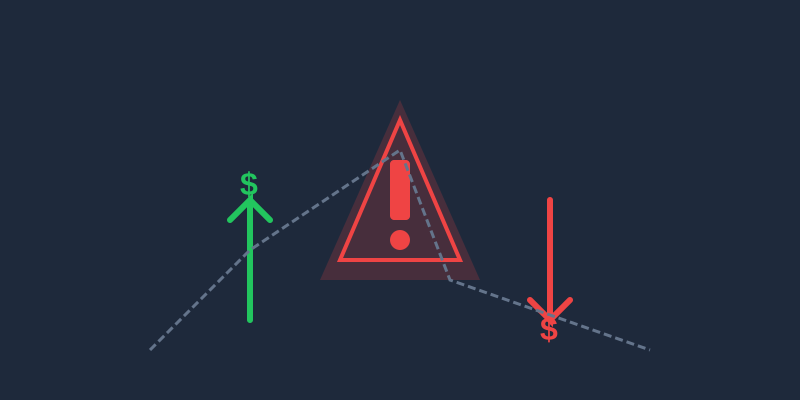
Penny stock pump and dump schemes are one of the oldest and most prevalent forms of securities fraud. These scams have cost investors billions of dollars and remain a serious threat in the penny stock market. Understanding how pump and dump schemes work, recognizing the warning signs, and knowing how to protect yourself is essential for anyone considering penny stock investments.
In this comprehensive guide, we'll expose the anatomy of pump and dump schemes, reveal the tactics scammers use to manipulate penny stocks, and provide you with actionable strategies to identify and avoid these fraudulent operations. Whether you're a beginner or experienced trader, this knowledge could save you from devastating financial losses.
Featured Penny Stock Opportunity
Offshore Namibia Oil & Gas Exploration
Stamper Oil & Gas (STMP)
Asymmetric Opportunity: Trading at ~$10M USD with risked NAV of ~$255M and probability-weighted upside suggesting 25x potential
Industry-Leading Success: 14 of 16 exploration wells successful since 2022 in Namibia. Supermajors committing billions
Carried Interest Portfolio: Exposure to basin-opening wells without proportionate capital investment. No dilution strategy
2025-2026 Catalysts: Venus FID expected, Chevron Walvis Basin wells, new seismic on PEL 106, and multiple farm-out opportunities
⚠️ High-risk investment. Oil & gas exploration carries substantial risk including total loss of capital. Not investment advice. Conduct independent due diligence.
What Is a Pump and Dump Scheme?
A pump and dump scheme is a form of securities fraud where fraudsters artificially inflate (pump) the price of a stock they own through false or misleading statements, then sell (dump) their shares at the inflated price, leaving other investors with worthless stock as the price collapses.
These schemes typically target penny stocks because they're thinly traded, have low liquidity, and require less capital to manipulate. A small amount of buying pressure can dramatically increase the price of a penny stock, making it the perfect vehicle for pump and dump operators.
The Anatomy of a Pump and Dump
Every pump and dump follows a predictable pattern. Understanding these stages helps you identify and avoid these scams before you become a victim.
- Accumulation Phase: Fraudsters quietly accumulate shares at low prices
- Pump Phase: Massive promotional campaign using false claims and hype
- Distribution Phase: Insiders sell shares to unsuspecting retail investors
- Dump Phase: Promotion stops, price collapses, retail investors suffer losses
- Disappearance Phase: Promoters move on to the next target stock
Common Pump and Dump Tactics
Scammers use increasingly sophisticated methods to promote penny stocks and lure unsuspecting investors. Recognizing these tactics is your first line of defense against fraud.
Email Spam Campaigns
Email spam remains one of the most common pump and dump tactics. Fraudsters send millions of emails touting 'hot stock tips' or 'guaranteed winners' to massive email lists. These emails often claim inside information, imminent announcements, or explosive growth potential.
The emails typically feature urgent language designed to create FOMO (fear of missing out), encouraging immediate action before others discover the 'opportunity.' Red flags include claims of '1000% returns,' 'ground floor opportunities,' and 'act now before it's too late.'
Social Media Manipulation
Modern pump and dump schemes heavily utilize social media platforms like Twitter, Facebook, Reddit, Discord, and Telegram. Fraudsters create fake accounts, build credibility through legitimate-sounding analysis, then promote their target stocks to their followers.
- Coordinated posting campaigns across multiple platforms
- Fake testimonials from 'successful traders' who made huge profits
- Manipulation of trending topics and hashtags
- Private 'VIP' groups offering exclusive stock picks
- Bot accounts creating artificial social proof
- Influencers paid to promote stocks without disclosure
Cold Calling and Boiler Rooms
Traditional boiler room operations still exist, though they've evolved with technology. High-pressure salespeople call potential investors with scripted pitches about 'can't-miss' penny stock opportunities. They use sophisticated psychological tactics to overcome objections and create urgency.
These operations often target elderly investors or those who have previously invested in penny stocks. The callers may impersonate legitimate brokers, use fake credentials, or claim connections to insider information.
Paid Stock Promotion Websites
Many seemingly legitimate stock research websites are actually paid promotion vehicles. Promoters pay these sites to feature glowing reports about specific penny stocks, creating the illusion of independent analysis and endorsement.
Look for tiny disclaimers (often in hard-to-read fonts at the bottom of the page) that reveal the site received compensation to promote the stock. This compensation can be cash payments or free shares that the promoter will dump when the price rises.
Red Flags: How to Identify Pump and Dump Stocks
Learning to spot the warning signs of pump and dump schemes can save you from significant financial losses. Here are the most reliable red flags to watch for:
Price and Volume Anomalies
- Sudden unexplained price spike (50-500%+ in days or weeks)
- Massive volume increase without legitimate news catalysts
- Price movement contradicts overall market conditions
- Chart shows classic 'pump and dump' pattern (sharp rise, sharp fall)
- Trading volume returns to normal after promotion stops
- Wide bid-ask spreads indicating manipulation
Company Warning Signs
- No significant revenue or business operations
- History of reverse splits or dilution
- Frequent name and ticker changes
- Shell company or recently resurrected dormant company
- Management with history of failed ventures
- Vague or constantly changing business model
- No verifiable contact information or physical address
- Delinquent SEC filings or no filings at all
Promotional Red Flags
- Unsolicited stock tips via email, text, or social media
- Promises of guaranteed returns or specific price targets
- Claims of 'insider information' or exclusive opportunities
- High-pressure tactics and urgency to act immediately
- Comparison to successful large companies (the next Apple, Amazon, etc.)
- Celebrity endorsements without proper disclosures
- Vague references to revolutionary technology or products
- Paid promotion disclaimers hidden in fine print
Real-World Pump and Dump Examples
Examining actual pump and dump cases helps illustrate how these schemes unfold and the devastating financial impact on unsuspecting investors.
The Wolf of Wall Street Case
Jordan Belfort, the real 'Wolf of Wall Street,' operated one of history's most notorious pump and dump operations through his brokerage firm Stratton Oakmont in the 1990s. His firm manipulated penny stock prices through high-pressure sales tactics and artificial market making, defrauding investors of approximately $200 million.
Crypto-Related Pump and Dumps
While not technically penny stocks, cryptocurrency pump and dumps follow identical patterns and have become increasingly common. Organized groups coordinate buying, promote coins through social media, then dump on late buyers. The thin liquidity of small-cap cryptocurrencies makes them particularly vulnerable.
How to Protect Yourself from Pump and Dump Schemes
Protection against pump and dump fraud requires vigilance, skepticism, and adherence to sound investment principles. Here's your comprehensive defense strategy:
Due Diligence Checklist
- Verify company fundamentals through SEC filings (10-K, 10-Q)
- Research company management backgrounds and track records
- Confirm actual business operations and revenue sources
- Check for recent promotional campaigns or paid advertisements
- Analyze trading volume and price patterns over extended periods
- Review insider trading activity and share structure
- Investigate company's legal and regulatory history
- Verify claimed partnerships, contracts, and achievements
Safe Trading Practices
Implementing strict trading rules helps protect you even if you accidentally research a promoted stock. Never invest based solely on promotions, tips, or social media hype. Always conduct independent research and verify claims through official sources.
- Never buy stocks based on unsolicited tips or emails
- Ignore high-pressure sales tactics and artificial urgency
- Use limit orders, never market orders on thinly traded stocks
- Start with small position sizes in any penny stock
- Set strict stop losses to limit potential losses
- Focus on exchange-listed stocks with better regulation
- Diversify across multiple investments, never go all-in
- If something seems too good to be true, it almost always is
Research Resources
Use legitimate research tools and official sources to verify information about penny stocks. The SEC's EDGAR database provides free access to all public company filings. Financial websites like Yahoo Finance and MarketWatch offer historical price and volume data. Check the FINRA BrokerCheck system to verify broker credentials.
For trading halts and real-time monitoring of penny stock activity, use our halt tracker which monitors NASDAQ, NYSE, TSX, and TSXV exchanges for unusual trading pauses that often accompany pump and dump schemes.
Legal Consequences of Pump and Dump Schemes
Participating in pump and dump schemes, even unwittingly sharing promotions, can have serious legal consequences. The Securities Exchange Act of 1934 makes securities fraud a federal crime punishable by up to 25 years in prison and millions in fines.
The SEC actively prosecutes pump and dump cases, using sophisticated surveillance to detect manipulation. Even social media influencers and individual promoters face criminal charges if they profit from stock manipulation without proper disclosures.
Recent Regulatory Actions
In recent years, the SEC has increased enforcement against social media-based pump and dump schemes. Several high-profile cases involved influencers who promoted stocks to millions of followers without disclosing they were paid or held positions in the securities.
The SEC's Office of Investor Education and Advocacy regularly publishes investor alerts about pump and dump schemes and maintains a list of suspended securities. Any stock with a trading suspension should be considered extremely high risk.
Alternative Ways to Trade Penny Stocks Safely
Not all penny stocks are pump and dump schemes. Many legitimate small companies trade below $5 per share and offer genuine investment opportunities. The key is focusing on quality over hype.
Focus on Exchange-Listed Stocks
Trading penny stocks listed on major exchanges like NASDAQ or NYSE significantly reduces fraud risk. These companies must meet minimum listing standards, provide regular financial reporting, and maintain better transparency. While still risky, exchange-listed penny stocks offer more investor protection than OTC markets.
Learn more about the differences in our comprehensive guide comparing OTC vs NASDAQ penny stocks and understand which trading venues align with your risk tolerance.
Use Penny Stock Screeners
Quality stock screeners help you identify penny stocks with legitimate fundamentals rather than promotional hype. Screen for companies with actual revenue, positive earnings growth, low debt levels, and insider buying. Our penny stock screener guide covers the best screening tools and criteria.
Monitor Trading Halts
Understanding trading halts helps you identify potentially manipulated stocks. Pump and dump schemes sometimes trigger halts due to volatility or pending news. Our trading halts explained guide and halt code reference help you interpret these important market signals.
Conclusion: Stay Vigilant, Stay Safe
Pump and dump schemes will always exist as long as there are penny stocks and uninformed investors. Your best defense is education, skepticism, and disciplined trading practices. Never let greed or fear of missing out override your rational decision-making.
Remember that legitimate investment opportunities don't require high-pressure sales tactics or promises of guaranteed returns. Real wealth is built through patient, informed investing in quality companies, not chasing hyped penny stocks promoted through spam emails and social media.
Use our free resources to stay informed about penny stock trading, monitor real-time halts, and learn proven strategies. If you're interested in legitimate penny stock opportunities, start with our beginner's guide to what penny stocks are and how to trade them safely with proper risk management.
Featured Penny Stock Opportunity
Offshore Namibia Oil & Gas Exploration
Stamper Oil & Gas (STMP)
Asymmetric Opportunity: Trading at ~$10M USD with risked NAV of ~$255M and probability-weighted upside suggesting 25x potential
Industry-Leading Success: 14 of 16 exploration wells successful since 2022 in Namibia. Supermajors committing billions
Carried Interest Portfolio: Exposure to basin-opening wells without proportionate capital investment. No dilution strategy
2025-2026 Catalysts: Venus FID expected, Chevron Walvis Basin wells, new seismic on PEL 106, and multiple farm-out opportunities
⚠️ High-risk investment. Oil & gas exploration carries substantial risk including total loss of capital. Not investment advice. Conduct independent due diligence.
Never Miss a Trading Halt
Get instant real-time alerts when stocks under $5 halt or resume trading on NASDAQ, NYSE, TSX & TSXV
View Live Halt Tracker →Continue Learning
Explore more penny stock trading guides

Trading Halts Explained: What Every Trader Should Know
Complete guide to stock trading halts: what they are, why they happen, halt codes (T1, T2, LUDP), and how to trade around them profitably.
Trading Halt Codes Explained: T1, T2, T12, LUDP
Complete guide to stock trading halt codes. Learn what T1, T2, T12, and LUDP mean, how long each lasts, and what they signal for traders.
What Happens When a Stock is Halted? Complete Guide
Learn what happens during a trading halt, how long halts last, if you can sell during a halt, and what to do when your stock is halted.